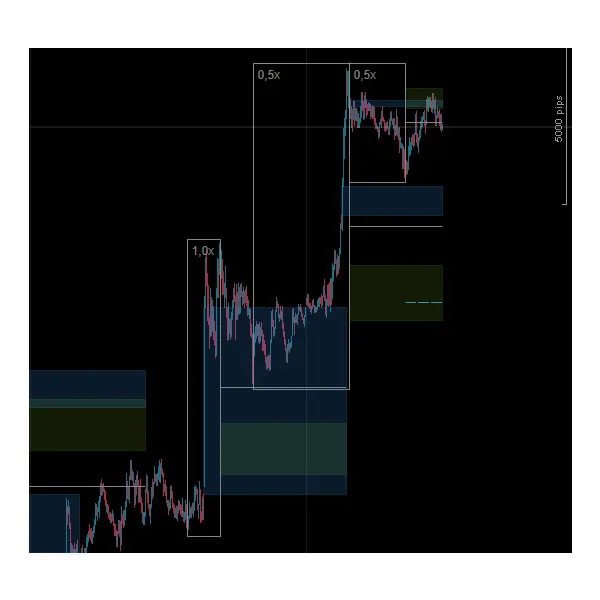

Trend following sounds simple: buy strength, sell weakness, ride the move. Automated versions on cTrader usually combine a direction filter (moving average stack, ADX threshold, breakout level) with position sizing rules and a stop policy.
They work when markets actually trend — London open on GBP pairs, certain commodity cycles, post-news continuation. They bleed in tight ranges because every false breakout becomes a small loss. That is normal. The bot is not broken; the regime is wrong.
Common building blocks
Entry — Close above 200 EMA plus pullback to 20 EMA, Donchian channel break, or higher-high confirmation. Each has different lag.
Exit — Trailing stop, opposite signal, or time-based flat at session end. Scalping trend bots exit faster; swing versions hold through pullbacks.
Filter — Volatility floor (no trades when ATR is tiny), session window, max spread check.
What to ask a seller
Which pairs and sessions was it tuned on? Does it stack positions (grid-style) or one trade at a time? Can you see the changelog when they adjust defaults after a bad month?
On AlgoScriptX, trend-following cBots include listings like the Monte Carlo CT Price Predictor. Filter by cTrader on the marketplace, read the short description, watch the demo video if there is one — products with video tend to be maintained.