Classic moving-average crosses still dominate beginner algo setups — and they still chop traders apart in ranges. John Ehlers’ MESA Adaptive Moving Average (MAMA) and its companion FAMA adapt the smoothing speed to the measured cycle, so the average can tighten in trends and loosen when the market goes sideways.
On cTrader, that idea usually ships as a visual indicator with optional regime filters (trend vs range). This guide covers practical strategy patterns — not a promise of profit — so you can test rules before you risk size.
What MAMA/FAMA actually changes
A fixed-length EMA always lags the same way. MAMA estimates the dominant cycle and adjusts alpha. In strong directional moves the line tracks price more tightly; in chop it slows down. FAMA is a further-smoothed companion often used as a “signal” line for crosses or color flips.
That does not remove false signals. It changes when they appear. You still need a filter for session, volatility, and risk.
Strategy 1 — Adaptive trend follow with a regime gate
- Trade only when the indicator’s regime filter marks trend (however your tool defines it — ATR slope, efficiency ratio, or dedicated regime state).
- Enter long when MAMA crosses above FAMA (or price reclaims MAMA) in the trade direction of the higher timeframe bias.
- Exit on the opposite cross, or when regime flips to range.
- Hard stop beyond the last swing; size from stop distance, not “feeling.”
Backtest this on one liquid symbol first (e.g. EURUSD or XAUUSD) across at least two years. If most of the equity curve comes from three trades, the edge is not robust.
Strategy 2 — Range stand-down (the edge most people skip)
The highest ROI “strategy” with adaptive averages is often not trading. When the regime filter says range:
- Disable new trend entries.
- Optionally switch to a separate mean-reversion playbook — or stay flat.
- Keep alerts for a regime flip instead of forcing crosses.
Many losing MA systems are fine in trends and lethal in ranges. Adaptive tools help only if you obey the filter.
Strategy 3 — Combine order-block context with adaptive timing
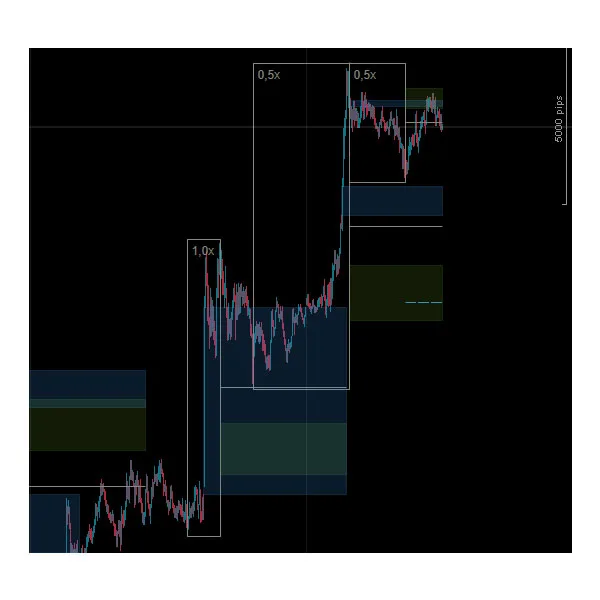
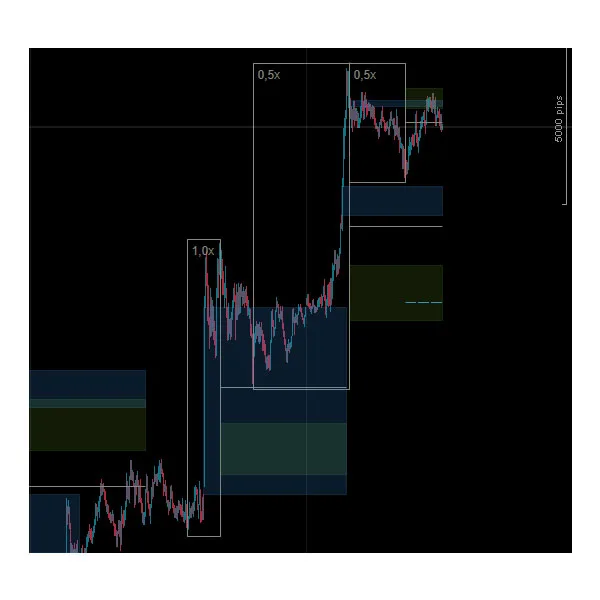
SMC markup (order blocks, liquidity sweeps) answers where institutional footprints may sit. Adaptive MAs answer when momentum resumes. A clean workflow:
- Mark higher-timeframe bias and relevant order blocks with an SMC tool.
- Wait for price to interact with that zone.
- Take continuation only if MAMA/FAMA and the regime filter agree with the bias.
Example listings on AlgoScriptX: MAMA FAMA Adaptive Moving Average + Regime Filter for timing, and SOB Pro v54 ASX for order-block markup. Neither replaces a written risk plan.
How to validate before you buy (or size up)
- Replay the indicator on historical charts — watch for repaint or lag that looks magical in screenshots.
- Write the entry/exit rules in one paragraph. If you cannot, you cannot automate them later.
- Install on demo first: How to install a .algo file in cTrader Automate.
- Run a licensed backtest, then forward-test for weeks with tiny size.
Common mistakes
- Optimizing period inputs until the equity curve is a straight line — then watching live results collapse.
- Ignoring spread and commission on lower timeframes.
- Stacking five adaptive filters until no trades remain (or only lucky ones).
- Treating “MESA” branding as a guarantee; implementation details differ by seller.
Bottom line
Adaptive moving averages and regime filters are tools for state-aware trading: press in trends, stand down in chop, and optionally sync entries with SMC zones. Test the rules, not the marketing.
Browse live cTrader indicators on the AlgoScriptX marketplace.